





Businesses operating in Dubai come with a lot of perks and profits at the same time. But, if your company is operating inside the Dubai International Financial Centre DIFC. You might find it difficult to manage. The rules are constantly evolving, and not to forget, UAE employment law does not apply here. DIFC has its own set of regulations. But it isn’t something to worry about, because DIFC Employment Law made things simpler. This is an easy way to understand your obligations as an employer and your rights as an employee. Following this legal framework only brings clarity and smooth functioning.
Rely on this guide to uncover every little detail that you need to know. What the law covers, how it affects contracts, leave, and terminations. Also, find out why smart HR tools are your best ally in staying compliant without the headache.
Understanding DIFC Employment Law:
The DIFC framework is designed to create a business-friendly yet fair working environment.
One of the leading global financial hubs is the Dubai International Financial Centre (DIFC). It attracts banks, insurers, and professional service firms. It has its own independent legal system, including employment regulations. This provides clarity for both employers and employees.
DIFC law holds importance when it comes to employers. It ensures that the contracts are standardized and enforceable. Employees gain confidence in fair treatment. Not only this, but businesses benefit from a transparent dispute resolution framework.
Key Objectives of DIFC Employment Regulations:
The employment regulations serve several key purposes:
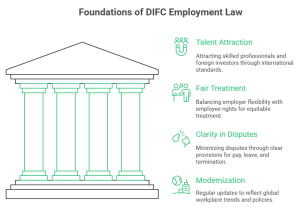
- Talent Attraction: By aligning with international standards, DIFC becomes appealing to foreign investors and skilled professionals.
- Fair Treatment: They aim to balance employer flexibility with employee rights.
- Clarity in Disputes: With clear provisions for pay, leave, and termination, disputes are minimized.
- Modernization: Regular updates ensure the law reflects global workplace trends, such as family leave policies and workplace savings schemes.
Scope of DIFC Employment Law:
Not every business is affected by this law. It only applies within DIFC’s jurisdiction, specifically.
Which Companies and Employees Are Covered?
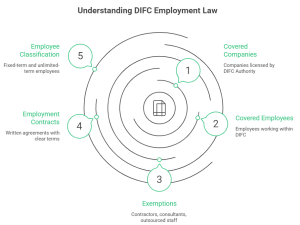
DIFC Employment Law applies to all companies licensed by the DIFC Authority. Other than this, employees who work physically within DIFC are also included. International companies registered in DIFC for regional operations.
Exemptions may apply, depending on their contracts, to:
- Contractors.
- Consultants.
- Outsourced staff.
Employment Contracts and Classification of Workers:
There should be written employment contracts under DIFC law. They should clearly state the job title and duties. Accurate basic as well as gross salary should be mentioned along with the detailed benefits that they are entitled to receive. Workers should be clearly informed about their working hours and leave entitlements in clear written form.
However, employees are generally classified into two categories. This classification determines entitlements at termination and impacts end-of-service benefits:
- Fixed-term Employees: These are the ones who are hired for a specific duration.
- Unlimited-term Employees: Such employees have no limited duration and are appointed on open-ended contracts with no fixed end date.
Core Provisions Employers Must Know:
Avoid disputes by establishing a better understanding with the employee.
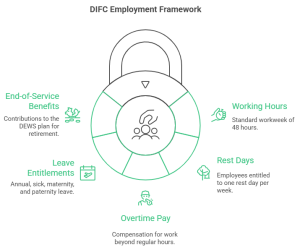
- Working Hours: The standard workweek is 48 hours.
- Rest Days: Employees must get at least one rest day per week.
- Overtime: Overtime pay applies when working beyond regular hours unless exempt (for senior roles).
Leave Entitlements:
Employees in DIFC receive:
- Annual leave: 20 working days per year.
- Sick leave: 60 days (with tiered pay).
- Maternity leave: 65 days (33 paid, 32 unpaid).
- Paternity leave: 5 working days.
For businesses, tracking leave accurately is crucial. Using a Leave Management System can simplify applications, approvals, and compliance.
End-of-Service Benefits and Gratuity:
Instead of gratuity, DIFC companies must contribute to the DEWS (DIFC Employee Workplace Savings) plan. Employers contribute a percentage of the employee’s monthly salary into this scheme.
This ensures workers receive retirement savings while employers remain compliant.
Termination Rules and Employee Protections:
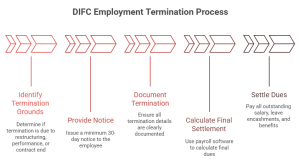
Ending an employment relationship must follow DIFC’s specific rules. Employers can terminate contracts for:
- Business restructuring or redundancy.
- Poor performance or misconduct
- End of fixed-term contract.
Unlawful termination can result in compensation claims, so clear documentation is vital.
Notice Periods and Settlement of Dues:
- Minimum 30 days’ notice is required for most employees.
- All dues, salary, leave encashments, and benefits must be settled promptly.
Using Payroll Software UAE helps businesses calculate final settlements quickly and avoid errors.
Compliance and Record-Keeping Requirements:
DIFC places strong emphasis on documentation and data protection.
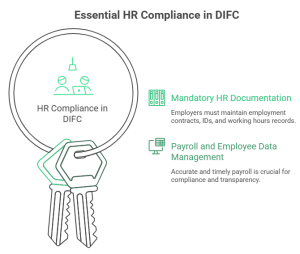
Employers must maintain:
- Employment contracts
- Copies of IDs and visas
- Records of working hours and leave.
- Salary slips and contribution details
Payroll and Employee Data Management:
Payroll must be accurate, timely, and transparent. Using HR Management Software UAE ensures proper record-keeping and compliance with DIFC audits.
DIFC Employment Law vs UAE Employment Law:
While both frameworks safeguard workers, there are distinctions that businesses should carefully note.
Key Differences:
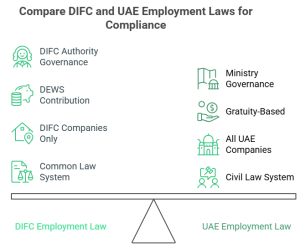
| Aspect | DIFC Employment Law | UAE Employment Law |
| Governing Authority | DIFC Authority | UAE Ministry of Human Resources & Emiratisation |
| End-of-Service Benefits | DEWS contribution | Gratuity-based |
| Jurisdiction | DIFC companies only | All UAE mainland and free zone companies (except DIFC & ADGM) |
| Legal System | Common law | Civil law |
Key Similarities:
- Minimum standards for working hours and leave.
- End-of-service or savings-based benefits.
- Anti-discrimination policies.
Implications for Businesses Operating in Both Jurisdictions:
Compliance with the law is mandatory to follow, especially for companies with branches in DIFC and the mainland UAE. This requires clear HR policies and separate payroll processes to stay aligned.
Using HR Software to Ensure DIFC Compliance:
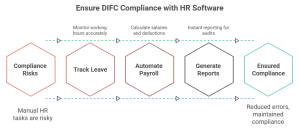
Technology helps reduce risks by automating HR and payroll tasks.
Tracking Leave and Attendance Accurately:
Businesses can easily monitor working hours of their employees with an Attendance Management System. Not only this, they can keep a track of rest days and absences in updated insights. This ensures leave entitlements remain compliant.
Automating Payroll and Benefits:
Automating payroll effectively, HR software calculates salaries, deductions, and DEWS contributions automatically. This ultimately reduces errors and maintains compliance.
Generating Compliance Reports:
Instant reporting for audits and inspections is also conducted by smart platforms. Integrating Employee Benefits Management further simplifies compliance tracking.
Common Compliance Mistakes to Avoid:
Many businesses face penalties because they overlook small details.
- Hiring consultants as full-time employees—or vice versa—can lead to disputes and fines. Ensure contracts reflect the true nature of the work.
- DIFC laws evolve regularly. Employers must update policies and employee handbooks accordingly to avoid non-compliance.
Final Thoughts:
Staying Ahead of DIFC Employment Law Changes.
There is no fixed employment rule. DIFC continuously updates its framework to match global best practices and strategic matters. The company must evolve with changing regulations. Companies can easily get rid of the fear of non-compliance and say goodbye to guesswork. Leveraging the HR digital solution makes it easier to automate payroll, attendance, and employee benefits.
Connect HR shows how companies across the UAE manage employees smoothly. The HR software, payroll automation, and compliance solutions make the operation of any business easier. There will be no legal threat or fear of penalties.

