





Why UAE Hospitals Need Purpose-Built HR Software for Healthcare
A Complete Guide
Hospitals and healthcare don’t slow down for anyone. Patients arrive at all hours with all different kinds of emergencies and conditions requiring immediate attention. Departments undergo massive shifts without prior warning. And behind every doctor or nurse stands an HR team trying to keep staffing, documentation, and compliance aligned. Hospitals today are not struggling with a lack of people. They struggle with managing the right people, at the right time, with the right credentials.
When workforce management is affected, the impact echoes throughout. Patient care slows. Staff experience burnout. Compliance risks increase. That’s why more healthcare leaders now rely on HR software for healthcare in UAE to manage their workforce.
Operational Challenges that UAE Hospitals Face Today
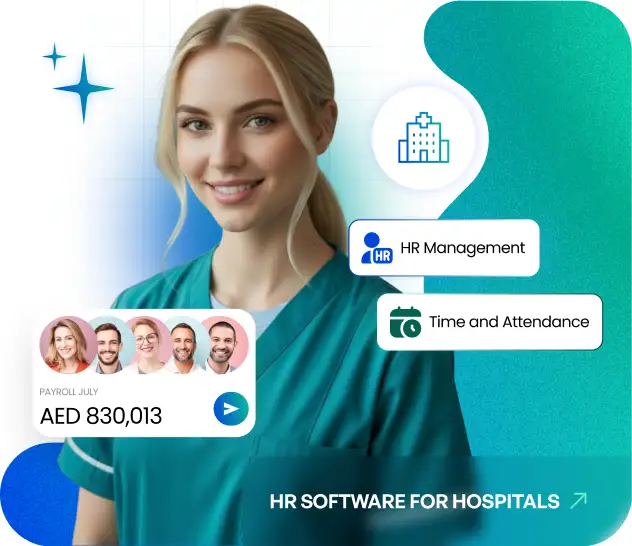
Hospitals operate around the clock while managing strict licensing requirements and patient safety responsibilities. For hospital administrators and HR leaders, the daily list of workforce responsibilities continues to grow: Staff licenses should always be up-to-date with renewals, departments must remain fully staffed across multiple shifts, payroll needs to account for overtime, allowances, and emergency coverage.
Why Traditional HR Systems Fail in Healthcare
Most HR tools were designed for white collar jobs with office environments in mind. Hospitals operate differently, and that’s exactly where generic HR systems fail.
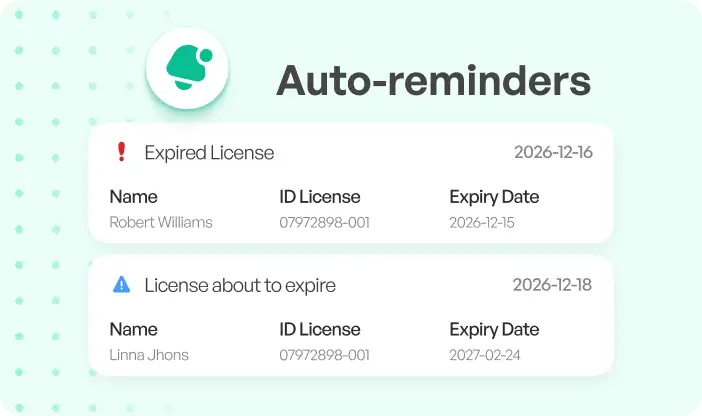
General HR systems struggle with managing complex healthcare workforce operations. This is evident in how licenses expire without any automated alerts going out. Missing a license renewal can prevent a medical professional from legally practising. That oversight can disrupt your entire department. Shift planning becomes difficult when departments are already operating 24 hours a day. Payroll calculations become even more complicated when overtime, night allowances, and on call coverage enter the equation.
Most often, HR teams generally rely on spreadsheets and manual reminders to help them maintain control. This seems manageable, but is actually consuming more time and increasing risk in a sector where risk can be too expensive.
The Hidden Cost of Manual HR Processes
Many hospitals continue relying on spreadsheets and paper records because those systems feel familiar. Yet the hidden cost appears in wasted hours and operational inefficiencies. HR teams spend significant time answering these routine questions from staff:
- Where is my payslip?
- How many leave days remain?
- When does my license expire?
These interruptions accumulate throughout the week.
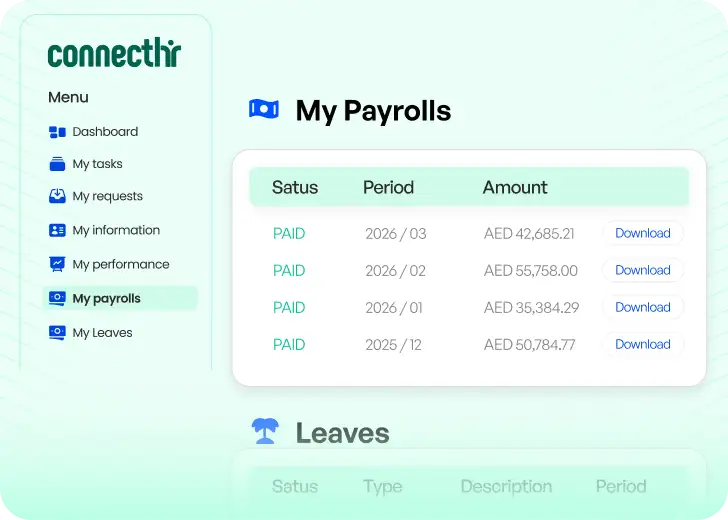
A digital HR platform introduces employee self service portals that allow staff to access their own information instantly. Payslips, leave balances, and schedule updates become available through secure portals. HR teams regain hours every week that would otherwise disappear into routine requests. Those hours return to work that strengthens workforce management.
What Purpose-Built HR Systems Actually Solve for Hospitals
Healthcare organizations in the UAE operate under strict regulatory expectations. Labour laws, Emiratisation initiatives, and healthcare authority licensing requirements impact how hospitals manage their workforce. This is why hospitals increasingly adopt HR software for healthcare in UAE that reflects these operational realities.
Unlike generic HR platforms, healthcare focused systems support compliance management, credential tracking, and workforce scheduling built specifically for hospitals. These platforms adapt to healthcare workflows rather than forcing HR teams to adjust their processes.
The difference becomes visible quickly in how administrative work decreases, compliance visibility improves, and HR teams gain confidence that workforce operations remain under control.
How Specialized HR Software Solves Healthcare Workforce Challenges
Purpose built HR platforms focus on the operational areas that create the most pressure inside hospitals. Instead of scattered systems and manual processes, HR teams gain one structured solution to manage their workforce operations.
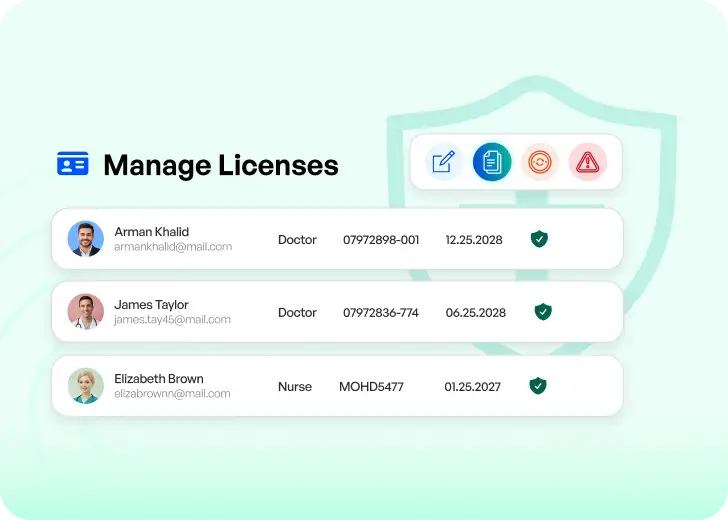
Healthcare professionals operate under strict licensing requirements. Doctors, nurses, technicians, and pharmacists must maintain valid certifications.
Manual tracking often leads to missed renewal dates or incomplete documentation. Specialized HR systems store credentials in centralized employee profiles and send renewal alerts well before expiration. Hospitals maintain audit ready records without manual monitoring. This helps HR teams shift away from reacting to problems to instead actively preventing them.
Fixed working hours is not how hospitals operate. There are multiple rotating shifts.
Having advanced scheduling tools allow HR teams and department heads to easily assign shifts across departments while avoiding any overtime conflicts and coverage gaps at the same time.
Administrators maintain control over workforce distribution and staff members can view their upcoming schedules. Better scheduling reduces burnout and thus stabilizes patient care.
Payroll process in healthcare involves far more variables than most industries. Night shifts, weekend allowances, overtime, emergency coverage, and on call duties require correct calculations. Manual payroll calculations increase the risk of mistakes that frustrate staff and damage trust.
Automated payroll systems apply defined rules for allowances, overtime, and leave deductions. HR teams supervise the process rather than calculating every detail manually
Hospital administrators often make workforce decisions based on partial information. When HR data is stored across spreadsheets, emails, and disconnected systems, leadership lacks a clear operational picture.
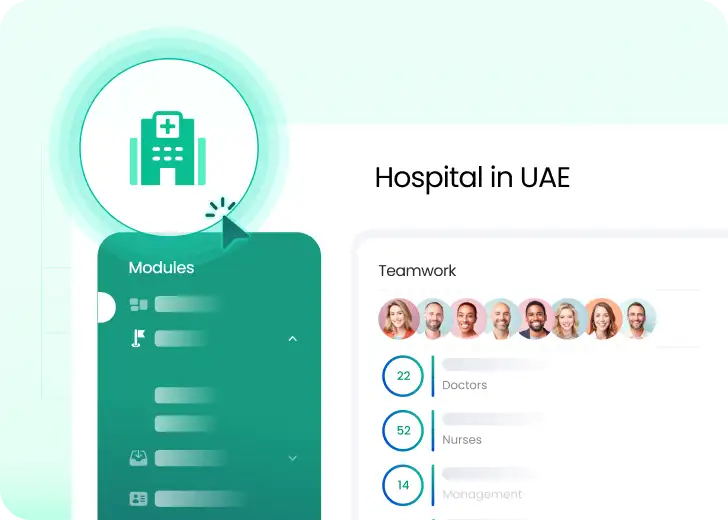
Purpose built HR systems consolidate workforce data into centralized dashboards.
Administrators gain access to insights such as departmental staffing levels, overtime trends, employee turnover patterns, and training completion rates.
These insights allow leadership teams to ask better operational questions:
- Which departments experience consistent understaffing?
- Are overtime costs rising due to scheduling gaps?
- Which teams require additional training support?
Planning becomes easier and decisions become faster when leadership can see the full picture.
Healthcare professionals train continuously throughout their careers. New treatment protocols emerge. Equipments get more advanced. Regulations change. Staff must stay updated.
Manual training records often scatter across email attachments, spreadsheets, and physical files. During audits, HR teams scramble to locate documentation.
A structured HR platform records training progress directly within employee profiles. HR teams and department heads instantly see completed certifications, upcoming training requirements, and staff eligible for specialized roles.
Training stops being a collection of documents and becomes a structured development pathway. Hospitals benefit because their workforce remains qualified and prepared.
Hospitals depend on constant coordination:
- Doctors communicate with nurses
- Nurses collaborate with technicians
- Department heads coordinate with administration
- HR teams interact with everyone
When important information spreads across emails and disconnected systems, communication becomes slower. Staff members repeatedly request information simply because they cannot locate it.
Centralized HR platforms act as a shared information hub. HR teams can publish policy updates, training announcements, and shift notifications in one location. Employees access information without having to send repeated requests. As a result, communication becomes faster and clearer.
Scaling Operations
Healthcare providers across the UAE continue expanding rapidly. Dubai Health Authority (DHA) has recently released data which shows that the number of licensed health care facilities went up to nearly 5,800 in 2025. It has gone up from 5,340 in 2024, which is an increase of more than 8 per cent.
Gulf news reported that the network now includes 55 hospitals, 68 specialised clinics, 60 day-surgery centres, 70 general dental clinics, 126 general medical clinics, 222 home health care centres and 101 alternative medicine centres.
UAE has also recorded a sharp rise in health care professionals, with the private sector workforce exceeding 69,400 in 2025, compared to 64,100 of the previous year, another growth rate of over 8 per cent.
As private clinics grow into multi-location networks and hospitals open new departments to meet rising patient demand, it gives way to new workforce management challenges.
Managing staff across multiple locations requires visibility into:
- Which departments need additional hires?
- Which clinics operate below capacity?
- Where do scheduling conflicts appear most often?
Without centralized systems, leadership relies on fragmented reports. On the other hand, a well-designed HR platform gives administrators a clear view across the organization. Leadership can see workforce data across departments and locations without collecting manual reports.
This helps hospitals:
- Monitor their staffing levels across facilities
- Coordinate workforce distribution
- Identify hiring needs early
- Maintain consistent policies across locations
Ready to try Connect HR Software for Healthcare ?
Our experts will show you the software in action so that you can see how it works. We look forward to your message
How UAE Hospitals Should Evaluate HR Software
Hospital administrators evaluating HR systems should look beyond general feature lists. The priority should be whether the platform understands healthcare workforce complexity.
These 3 questions can help you determine whether a system is actually built for healthcare:
Healthcare institutions are responsible for tracking credentials across multiple authorities including DHA, DOH, and MOH. A suitable platform will automate license monitoring, renewal alerts, and documentation storage.
Hospitals require flexible scheduling tools capable of handling rotating shifts, emergency coverage, and cross-department staffing adjustments. So the HRMS should be designed to support this level of complex operations.
Hospitals in the UAE are required to deal with visa management, WPS payroll reporting, and labour law requirements. The HR systems built with local regulations compliance will significantly reduce administrative risk.
How UAE Healthcare Providers Are Modernising HR Operations
Many hospitals and clinics across the UAE have already begun replacing manual HR processes with integrated workforce management systems. One healthcare provider recently implemented a centralized HR platform to manage licensing oversight, shift scheduling, payroll compliance, and employee self-service.
The result was immediately noticeable, with license expiry alerts reducing compliance risks, automated payroll systems calculating allowances accurately and generating WPS compliant files. Self-service portals allow their multinational staff to access payslips and leave requests without having to contact HR every time.

Make Workforce Management in Hospitals Look Easy
Workforce management should never become the barrier between medical teams and patient care.
Healthcare professionals dedicate enormous effort to patient care every day. The real challenge often comes with HR teams carrying the responsibility of keeping workforce operations organized while hospitals continue growing and adapting.
When those teams rely on manual systems, the workload expands quickly. Digital HR platforms change that equation. They bring structure to workforce data. They support compliance and staffing coordination. They reduce repetitive tasks and improve communication across departments.
Frequently asked questions.
HR software for hospitals in UAE is a specialized system designed to manage healthcare workforce operations such as staff scheduling, payroll, license tracking, and compliance. Unlike generic HR tools, it is built to handle 24/7 hospital environments, regulatory requirements, and complex staffing needs across departments.
Hospitals require purpose-built HR software because generic systems fail to handle healthcare-specific challenges like license tracking, rotating shifts, and complex payroll structures. Without specialized tools, hospitals rely on spreadsheets and manual processes, which increase compliance risks and operational inefficiencies.
HR software helps hospitals maintain compliance by tracking employee licenses, storing documentation, and sending automated renewal alerts. It also supports UAE labor laws, including WPS payroll requirements, ensuring hospitals remain audit-ready and avoid legal risks related to expired credentials or incorrect payroll processing.
Yes, HR software is designed to manage complex hospital scheduling, including rotating shifts, emergency coverage, and cross-department staffing. It allows administrators to assign shifts efficiently, avoid staffing gaps, and give employees visibility into their schedules, reducing burnout and improving operational stability.
Hospitals should look for features such as credential and license tracking, advanced shift scheduling, healthcare-specific payroll automation, employee self-service portals, and centralized workforce dashboards. These features help reduce administrative workload, improve decision-making, and ensure smooth hospital operations.

You have different questions?
Our team will answer all your questions. We ensure a quick response.
